Items
-
All Together Now 2020: Week 2
Videos in this collection include a highlight video with excerpts from lectures and seminars from the second week; Tamar Elad-Appelbaum's discussion about moral and spiritual leadership, and intervention in times of crisis; Micah Goodman's reflections on four Jewish philosophies as he discusses the challenge of empathy in times of crisis; and Dani Segal's discussion entitled "Reinventing Ourselves - New Paths for Connection and Communication". -
All Together Now, Summer 2020: For Heaven's Sake episodes
For Heaven’s Sake is a weekly podcast from the the Shalom Hartman Institute’s iEngage Project that revives the lost art of Jewish debate for the sake of illuminating a topic, not sowing division. The podcast draws its name from the concept of Machloket l’shem shemayim, “Disagreeing for the sake of heaven.” -
All Together Now 2020: Week 1
Videos in this collection include a highlight video with excerpts from lectures and seminars from the first week; Elana Stein Hain's discussion on truth and relationships in a polarized era; Ginna Green's and Justus Baird's conversation on Blackness, Jewishness, and America; and Donniel Hartman's discussion of ethical pivots in the time of COVID-19. -
All Together Now: Jewish Ideas for this Moment
All Together Now: Jewish Ideas for this Moment was a month-long celebration of Jewish ideas from the Shalom Hartman Institute. The free program included lectures, discussions, and seminars from over 60 scholars in both Israel and North America. The program addressed the fact that "the Jewish people are facing important questions about citizenship, nationalism, democracy, and the societies in which we live. COVID-19 has already reshaped our attitudes about collective community, and is also raising issues of theology, spirituality and social responsibility. " -
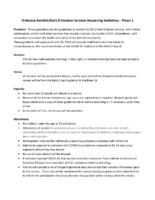
Durham Orthodox Kehillah COVID Policy June 2020
Durham Orthodox Kehillah COVID Policy June 2020. -
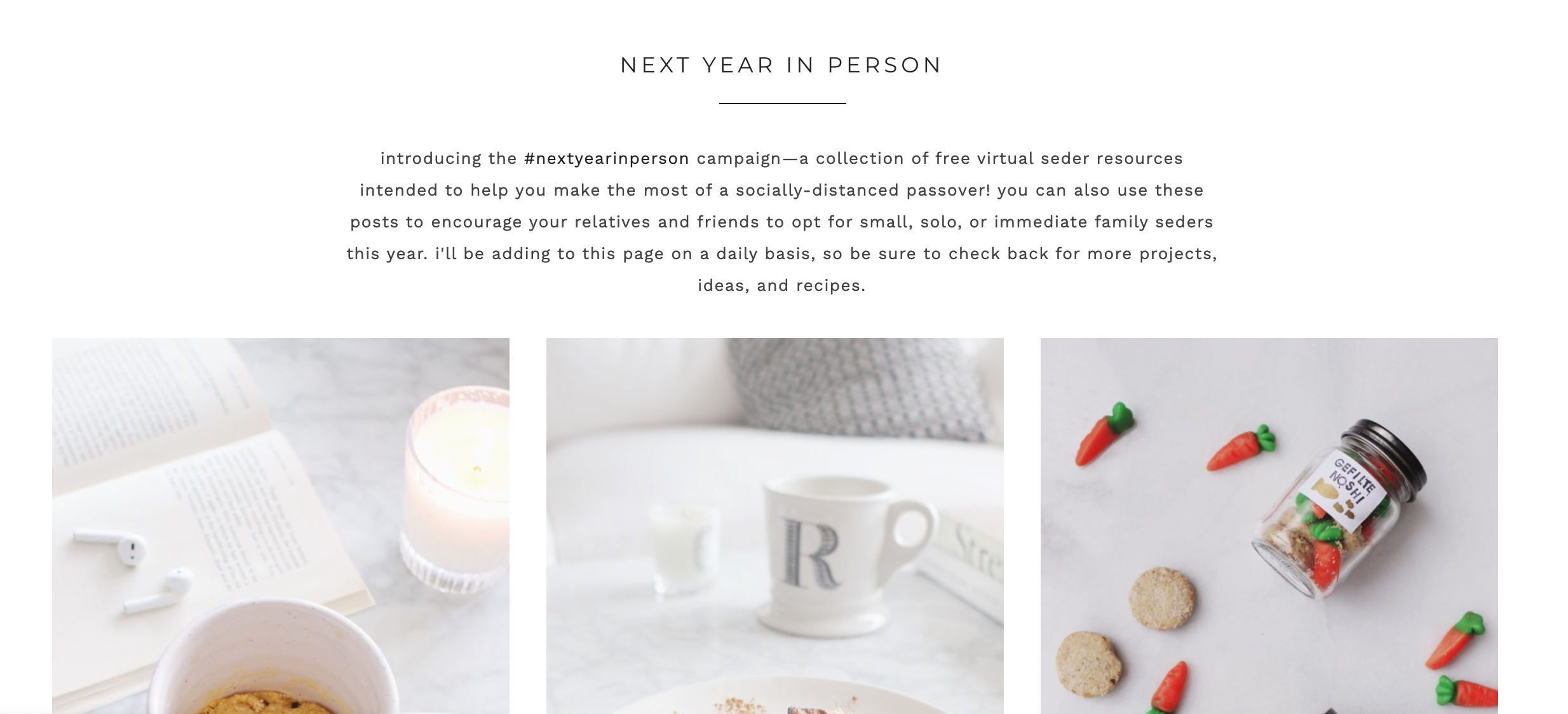
The Next Year in Person Campaign
As Passover 2020 approached, I decided to launch the #NextYearInPerson campaign to help readers of my Jewish-focused lifestyle blog (rebekahlowin.com) make the most of a socially-distanced holiday. It ended up being much more than just a hashtag: On the site, I published a collection of free virtual Seder resources, crafts (like the DIY watercolor Seder plate you see here), digital greeting cards, small-batch recipes, printable Haggadot ideas, virtual Seder invites, and detailed guides. The hashtag was used over 1,000 times by the end of the holiday. -
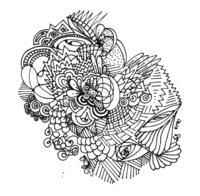
Zentangle Afikomen
Zoom Seders this year were able to accommodate most of the traditional practices. One custom that seemed at first glance to be beyond what one could do across screens was the hiding and finding of the Afikomen. Someone came up with the idea of hiding the Afikomen in a drawing or work of art that could be shared on the screen. So I asked my 17-year-old daughter to create a Zentangle Afikomen! -
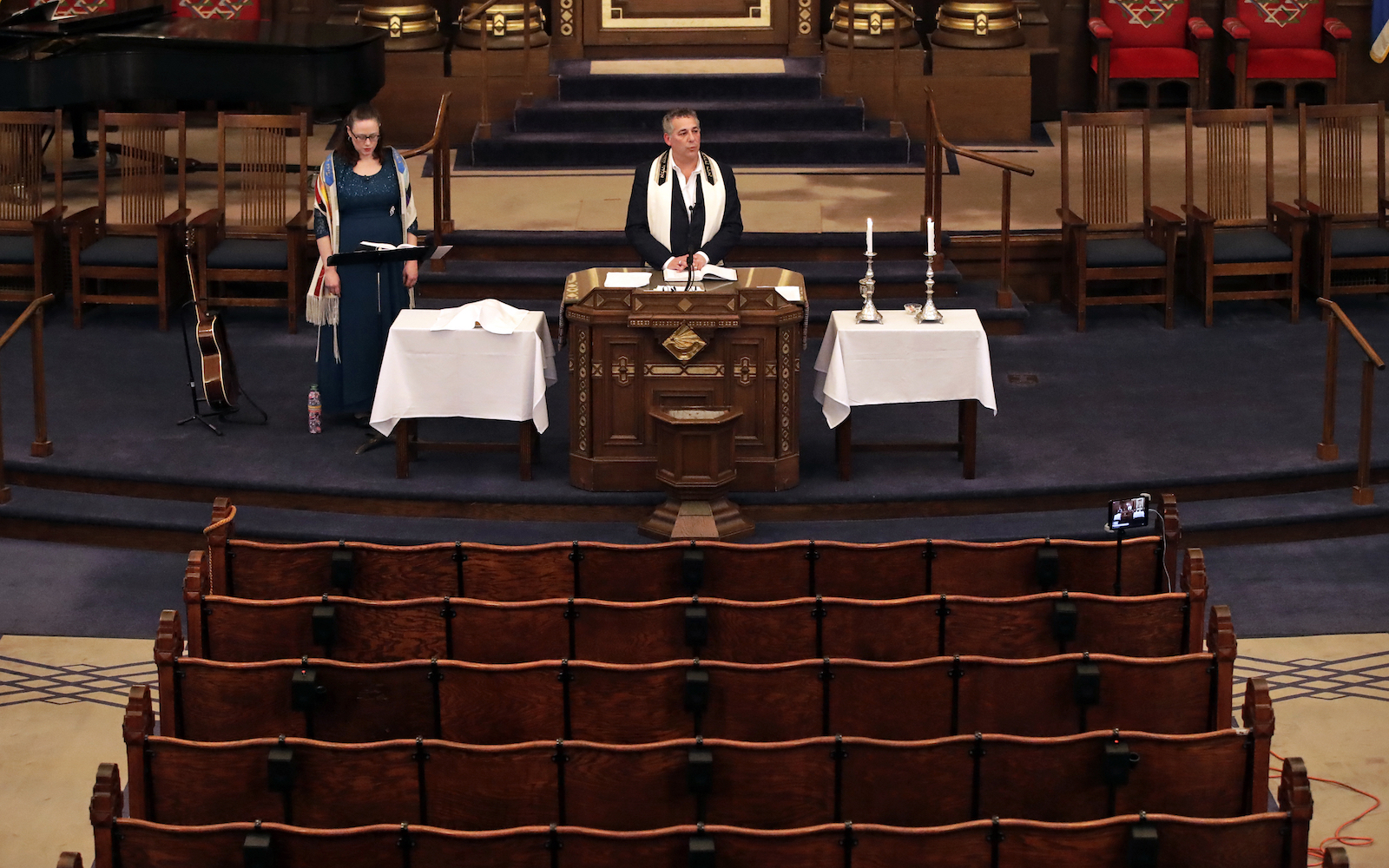
Think Piece: "No large High Holiday Services this year. There, we've said it. Now what?"
As a rabbi of a small congregation, I was involved in hours and hours of decisions about suspending each type of in-person activity. Each decision seems obvious looking back, but was excruciating and time-consuming at the time. It was hard to reflect or help our leadership reflect, re-root ourselves in our values. After one particularly frustrating meeting in April, with no grounding principles, I sat down to write some. A few weeks of revisions let me to write this, circulating it among some colleagues, revise it and eventually publish it. I heard from many, many colleagues, some I had never met, who found it helpful as both a way of thinking generally, and a way of looking ahead past the immediate and giving ourselves enough time to several months ahead toward the High Holy Days. -

Torah Reading in the forest
Three years ago, Marc, a close friend of mine and back neighbor, was preparing for his son’s bar mitzvah. Marc had never read the torah and it meant a lot to him to share the torah reading with his son. It was a double parsha week, too much for a bar mitzvah boy so it made for a natural split. I have taught bar mitzvah reading before so I volunteered to teach Marc and that made our friendship even stronger. He is musically inclined and had experience reading Hebrew so it was a smashing success. Three years later, the Pandemic struck and the shuls shut down on the anniversary of Marc’s son’s bar mitzvah. He was devastated because he had subsequently learned the second parsha and had been scheduled to read the torah in shul that week. Since shul was closed, we went to our respective backyards at noon on Shabbat and sat divided by the stream that runs in between our yards. He read the torah that week and neighbors who heard the singing came and joined to listen, each family standing a safe distance apart from the next. Everyone was so thirsty for community and for services that, like the Pied Pier of Torah reading, we ended with a nice crowd. Every week since then, he and I have met by the stream and have read the weekly parsha and haftarah together. We finished Shmot, Vayikra, and Bamidbar and are starting Devarim this week. The experience has brought so much to my pandemic life and is now the highlight of my week. We spend hours every Shabbat afternoon in the forest between our homes reading and talking about the parsha, and he has since learned and mastered reading the haftarah. -
Coronavirus Eli Tziyon
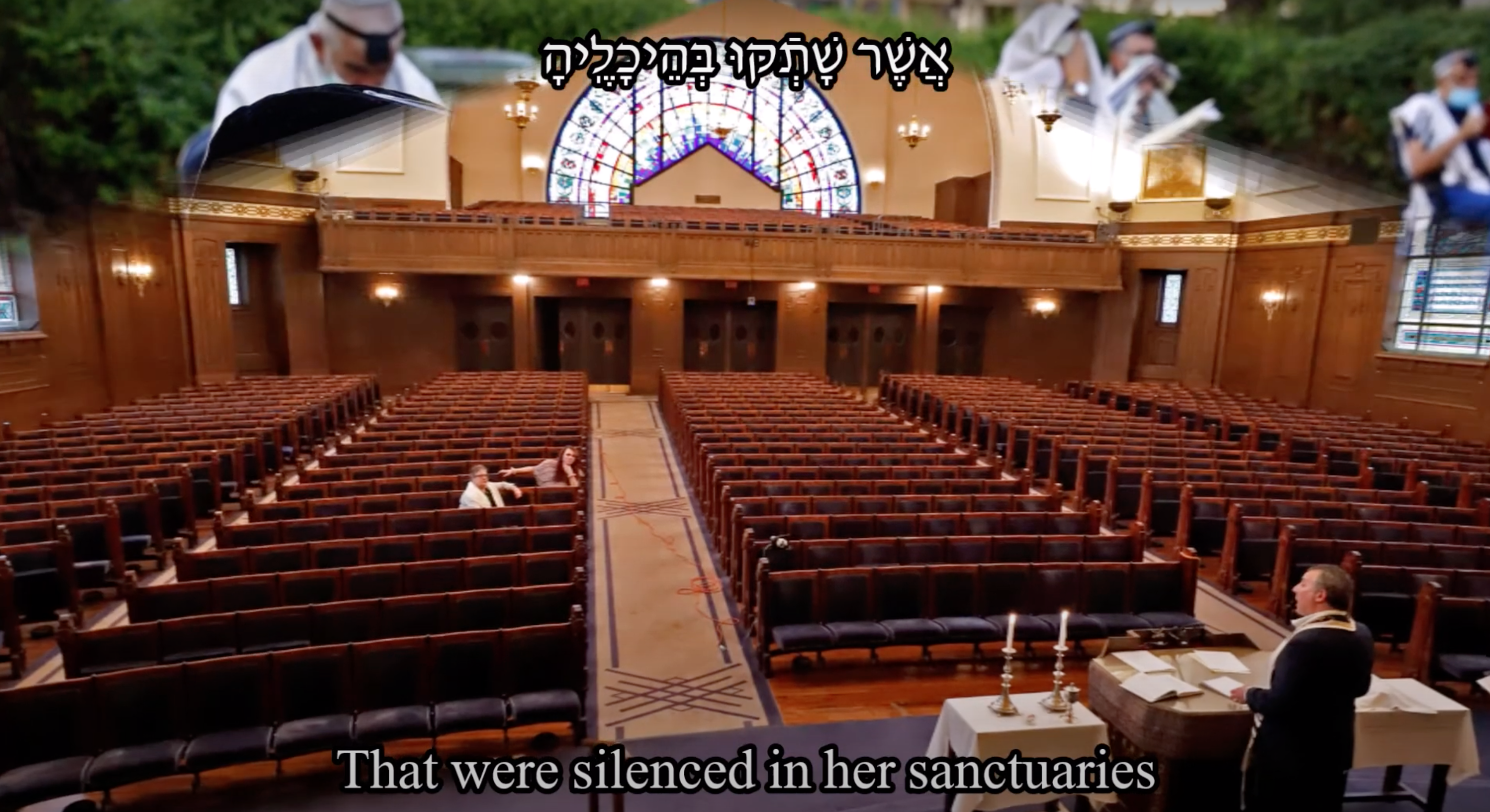
This is a kinah (dirge) for Tisha B'Av (9th of Av) that laments the great suffering endured by the world during the Covid-19 pandemic. It follows the structure of Eli Tziyon (Wail, O Zion), a medieval poem that mourns the destruction of the Temple. In that poem, the pain of the destruction is compared to that of a young widow grieving and of a woman in labor. In this version, Tziyon serves as a stand-in for the suffering of both the Jewish community and the world during the pandemic. The central image here is of a lonely Torah scroll sitting in an ark, unread, which reflects the isolation and sadness many have experienced over these months. The rest of the poem follows the Hebrew acrostic structure of the original with an aspect of the pandemic associated with each letter. This version is not meant as a final word on Covid. In fact, we'd love for it to be an invitation to write your own verses, and even poems, about the pandemic. We hope this video will be a meaningful contribution to Jewish communities' commemoration of Tisha B'Av on Wednesday night, July 29th through Thursday, July 30th. Contains (electronic) instrumental music. Credits: Written by Daniel Olson and Rabbi Ben Goldberg Editorial Consulting by Rabbi Jonah Rank Sung by Daniel Olson -
Corona Contemplations
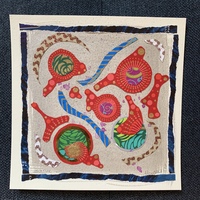
I have been struggling on how to represent the changes and destruction of life as we know it. Time seems to have shifted dramatically and feels like it is being taken apart bit by bit. Not knowing what the future will be like, the only thing we know is that life will never go back to the way it was in the past. I am participating in a text study and creative arts class which has really helped how I view art and study of sources that guide me and inspire me. -
Essay, "LOST and...FOUND" by Doris H. Goldstein
Essay written by Doris H. Goldstein of Atlanta, Georgia. A copy is housed in her papers in the Ida Pearle and Joseph Cuba Archives for Southern Jewish History at the William Breman Jewish Heritage Museum in Atlanta, Georgia (Mss 275, Martin and Doris Goldstein Papers, Box 1, File 5). -
Essay, "Spring, 2020" by Doris H. Goldstein
Essay written by Doris H. Goldstein of Atlanta, Georgia. A copy is housed in her papers in the Ida Pearle and Joseph Cuba Archives for Southern Jewish History at the William Breman Jewish Heritage Museum in Atlanta, Georgia (Mss 275, Martin and Doris Goldstein Papers, Box 1, File 5) -
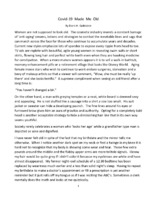
Essay, "COVID Made Me Old" by Doris H. Goldstein
Essay written by Doris H. Goldstein of Atlanta, Georgia. A copy is housed in her papers in the Ida Pearle and Joseph Cuba Archives for Southern Jewish History at the William Breman Jewish Heritage Museum in Atlanta, Georgia (Mss 275, Martin and Doris Goldstein Papers, Box 1, File 5) -
-
-
#WaynesboroWednesday Community Zoom
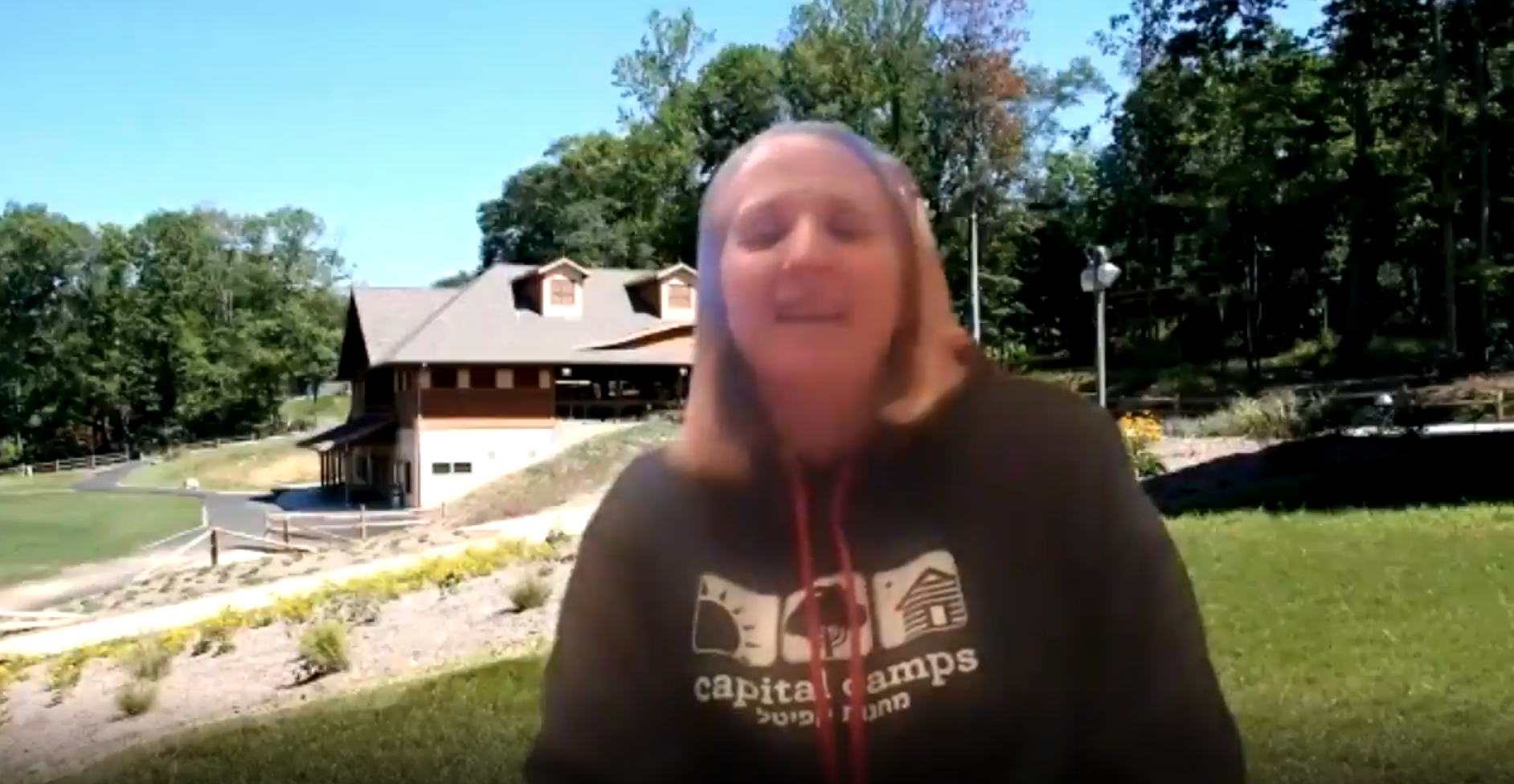
Each week, the Camp Community joins for #WaynesboroWednesday a live community zoom. This is one of those sessions. -
Promo Video for #WaynesboroWednesday
A promo video made by a group of counselors from across the globe for #waynesborowednesday Camp Community Zoom Activity -
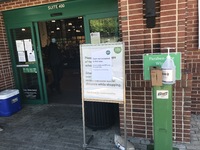
Zep hand sanitizer
Hand sanitizer created by Jewish-owned business, Zep, at the entrance of Whole Foods. Security guard is seen in the doorway rationing people into the store. -
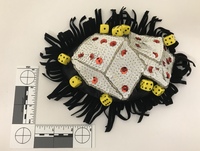
Kippah Face Mask
Face mask created by Eve Mannes of Atlanta, Georgia from her husband's kippah collection. This artifact was donated to the William Breman Jewish Heritage Museum on June 3, 2020. -
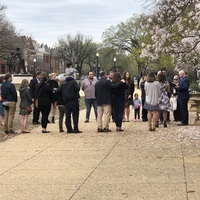
Social-Distanced Wedding
This image shows a small group congregating for a socially-distant outdoor wedding in Lincoln Park, towards the beginning of the pandemic. -
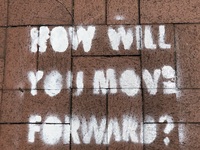
How Will You Move Forward?
"How Will You Move Forward?" is spray-painted onto a red brick sidewalk along 7th Street NW in Washington, D.C., in the near the Chinatown/Gallery Place Metro stop. The art was created in response to the COVID-19 pandemic. -
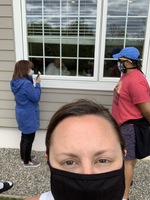
Socially Distanced Visit
Jaclyn Kimball donated this image to the Capital Jewish Museum of her and her family visiting their grandma in her nursing home, saying hi through the window -
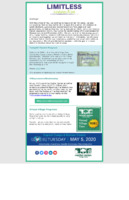
Limitless Connection: Capital Camps email, 4 May 2020
This email from Capital Camps to its members announces which virtual activities it will offer members that week via Zoom, along with a statement acknowledging they may not be able to open its doors for in-person camp activities this summer. -
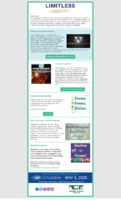
Limitless Connection: Capital Camps email, 27 April 2020
This email from Capital Camps to its members announces which virtual activities it will offer members that week via Zoom, along with other reminders and information.